
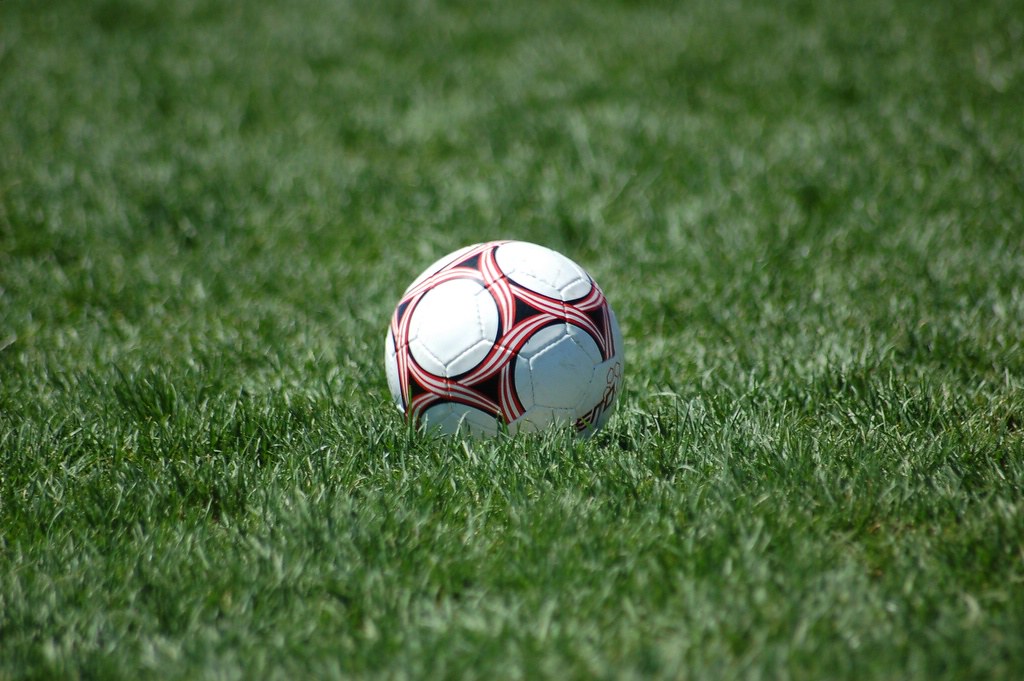
Football is the largest single application for sports artificial turf worldwide. From school pitches and community clubs to professional training grounds and stadiums, synthetic football turf delivers all-weather playability and dramatically lower maintenance than natural grass. But specifying the right system requires understanding a handful of technical parameters.
This guide breaks down the specifications that matter most when sourcing football artificial turf at the project or wholesale level.
Pile Height: The Foundation of Playability
Football turf typically uses a pile height between 40mm and 60mm. Longer piles (50–60mm) are common for full-size pitches that use rubber and sand infill, while shorter piles (30–40mm) suit non-infill or lightly-filled systems for five-a-side and training areas. Pile height directly affects ball roll, footing and player comfort.
Understanding Dtex and Fiber Strength
Dtex measures the weight of the yarn in grams per 10,000 meters — a higher dtex indicates a thicker, more durable fiber. For football, yarns commonly range from 8,800 to 13,500 dtex. Higher dtex fibers resist flattening and splitting under heavy use, extending the usable life of the pitch.
Density and Stitch Rate
Stitch rate (stitches per meter) and gauge (distance between rows) combine to determine turf density. A denser pitch provides better fiber support, more consistent ball behavior and improved durability. When comparing quotations, always confirm both the stitch rate and the total number of tufts per square meter.
Infill Systems
Traditional football turf uses a two-layer infill: a base layer of silica sand for stability and a top layer of rubber granules (SBR, EPDM or TPE) for shock absorption and traction. Newer non-infill systems achieve performance through dense, texturized fibers alone, eliminating infill migration and reducing maintenance.
Shock Absorption and Player Safety
Player safety depends on force reduction, vertical deformation and rotational resistance. Quality systems are engineered to cushion impacts and reduce joint stress while providing stable footing for quick turns. For competitive venues, shock pads beneath the turf can further enhance safety and consistency.
Certification Standards
Buyers supplying clubs and stadiums should look for turf tested against recognized standards such as FIFA Quality / FIFA Quality Pro or equivalent national certifications. These programs test ball roll, rebound, shock absorption and durability. Even for community pitches, certification-backed products reduce risk and support warranty claims.
UV Resistance and Climate Considerations
Outdoor football turf must withstand years of UV exposure, temperature swings and heavy rain. Specify UV-stabilized PE fibers and confirm drainage rates suitable for your climate. In hot regions, consider irrigation or cooling infill options to manage surface temperatures.
OEM and Project Supply
Factory-direct sourcing enables custom pile heights, dtex ratings, colors and even branded line markings tufted directly into the turf. For distributors and contractors, OEM packaging and project-specific roll widths help streamline logistics and installation.
Conclusion
Specifying football artificial turf means balancing pile height, dtex, density, infill and certification against your budget and usage level. Clear technical specifications are the key to a durable, safe and great-playing pitch. Contact our team for detailed datasheets, samples and a project quotation tailored to your requirements.