
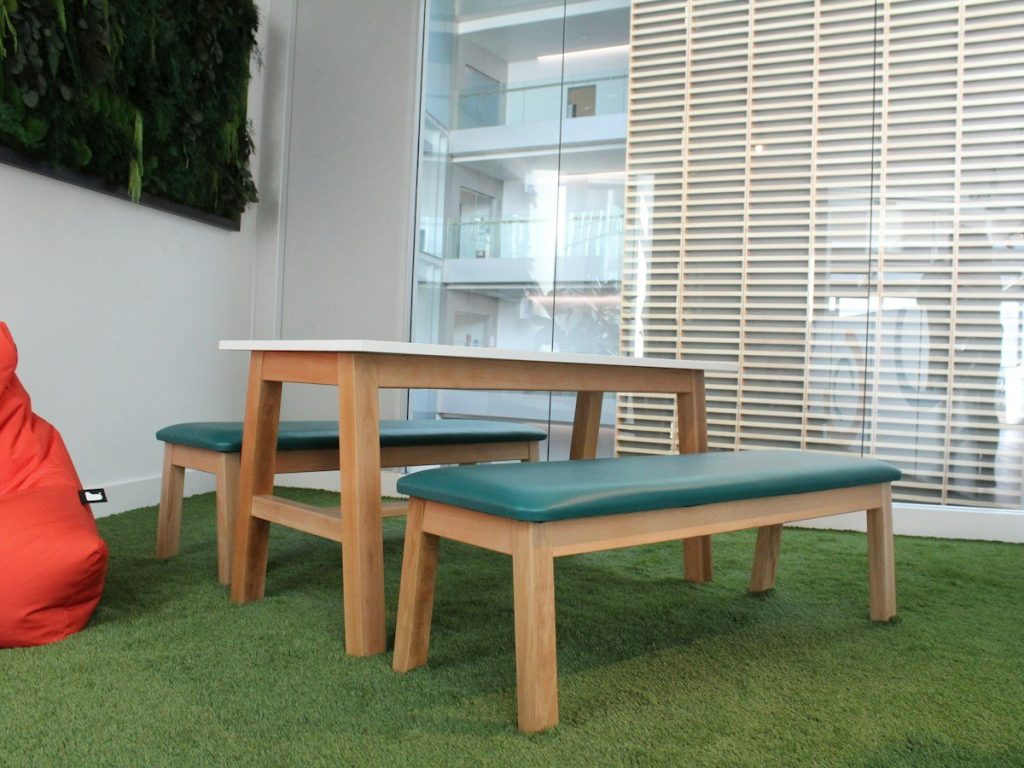
Indoor artificial turf is no longer a decorative novelty. As workplaces, schools, retail environments, and leisure venues look for year-round greenery without the lighting, irrigation, and maintenance demands of natural grass, synthetic turf has become a practical interior finish. But an indoor installation is not simply an outdoor landscape product moved inside. The selection criteria shift toward material safety, skin contact, foot comfort, acoustic softness, visual harmony, and reliable installation on interior subfloors.
For facility owners, contractors, and landscape professionals, the risk is specifying turf by color alone. A surface that looks right on a sample board may flatten too quickly in a reception area, feel harsh in a children’s play zone, trap moisture on a concrete slab, or show seams in a high-visibility office. The better approach is to match yarn, pile height, density, backing, and installation method to the room’s use pattern.
The most important facts are straightforward: PE and PP yarns dominate suitable indoor options; pile height generally works best between 10 mm and 20 mm; density must be balanced against softness and shedding; breathable, anti-slip backing helps manage indoor conditions; and a well-installed, properly maintained surface can deliver roughly 5 to 8 years of service. The sections below translate those facts into specification decisions for commercial interiors.
Why Indoor Artificial Turf Needs a Different Specification
Outdoor turf is often judged by weather resistance, UV stability, and how it performs under sports or landscape wear. Indoor turf faces a different test. It sits closer to occupants, often in enclosed rooms with limited ventilation, and is frequently touched by hands, bare feet, or seated users. That makes material safety, odor control, and skin-contact suitability more important than heavy-duty weather performance. A surface that is merely durable is not necessarily a good indoor surface.
This is also why indoor projects should be planned as part of the interior finish package rather than as an afterthought. The turf must coordinate with flooring transitions, furniture layouts, lighting color, and cleaning routines. In offices, reception areas, and showrooms, the visual goal is a calm, natural green that supports the brand environment without looking artificial under warm or cool lighting. In schools and family-oriented spaces, the priorities shift toward softness, secure seams, and easy cleaning. For a broader view of suitable commercial interior surfaces, see our commercial interior surfaces collection.
Indoor installations also need a realistic view of moisture and air movement. Concrete slabs and enclosed rooms can hold humidity, so non-breathable backing or trapped cleaning water may create odor and mold risk. A specification that ignores the subfloor and ventilation can fail even when the yarn itself is suitable. The practical rule is to select turf and backing together, then confirm installation details before the floor is prepared.
Natural grass is rarely viable in these interiors because it needs consistent light, drainage, and maintenance access that most rooms cannot provide. Indoor turf removes those constraints, but it also brings the surface into daily human contact. That is why a school playroom, a hotel sales suite, and an office break area should not automatically receive the same product. Use pattern, cleaning ability, and the amount of time people spend directly on the surface should drive the specification.
Material and Yarn Selection: PE, PP, Pile Height, and Density
Most suitable indoor turf uses polyethylene (PE) or polypropylene (PP) yarn. PE is generally softer and finer, giving a more natural foot feel and better suitability for family rooms, kindergartens, and spaces where people may sit or play on the surface. PP is stronger and more resistant to deformation, which makes it a sensible choice for offices, reception zones, and leisure venues with frequent foot traffic. Some projects use blends or hybrid constructions to balance softness with resilience.
Pile height should usually stay in the 10–20 mm range. Taller pile can look lush on a sample but may flatten, curl, or trap debris more readily in an indoor setting. Shorter pile is easier to clean and more dimensionally stable, but below about 10 mm the surface can feel firm and less comfortable underfoot. Density matters as much as height: a medium-density construction with well-anchored fibers usually gives a fuller visual finish and reduces loose-fiber complaints compared with a sparse, low-density product.
| Specification area | Practical indoor direction | Why it matters |
|---|---|---|
| Yarn polymer | PE for softness and skin contact; PP for high-traffic resilience; blends for balance | Matches comfort level to room use and expected abrasion |
| Pile height | 10–20 mm | Taller pile may mat or trap debris; shorter pile can feel harsh |
| Density | Medium to medium-high; visually full, not loose | Improves appearance, reduces shedding, and supports stable foot feel |
| Backing | Breathable, anti-slip, dimensionally stable | Helps manage indoor humidity and resist movement or curling |
| Installation format | Roll goods for large areas; tiles or mats for flexible zones | Balances seam control, replacement access, and design flexibility |
When comparing quotations, ask for yarn type, pile height, gauge or stitch density, backing composition, and roll width. These details let you compare products on performance rather than color alone. For settings where comfort and safety are central, kindergarten turf options often illustrate the balance of soft yarn, moderate pile, and secure backing that indoor play areas require.
Footfeel, Safety, and Acoustic Comfort
Foot comfort is a performance requirement, not a luxury. In offices, retail spaces, and exhibition areas, people may stand for long periods; in schools and playrooms, children may sit, crawl, and fall on the surface. A suitable indoor turf should feel resilient rather than spongy, with enough support to prevent excessive flattening. For fall-height protection, turf alone is rarely the full system; the underlay and subfloor must be specified to the intended use, especially in play areas.
Safety also depends on what touches the skin. Specify fibers and backings with low odor and documented suitability for direct contact. Seams should be tight and well bonded so edges do not lift, and perimeter fixing should be planned before installation. In rooms used by younger children, avoid small loose offcuts and confirm that adhesives are appropriate for indoor use and fully cured before occupancy.
Acoustic benefit is often undervalued. Turf and its backing can soften footstep noise and reduce the hard, reflective character of tile or concrete floors, but it is not a complete soundproofing solution. In open offices or multi-use rooms, combine turf zones with acoustic panels, soft furnishings, and a resilient underlay where noise control is a priority. The result should feel calmer without making cleaning or wheelchair movement difficult.
Color and pile direction also affect perceived comfort. A uniform pile direction can make seams and traffic patterns more visible; planned rotation during installation helps create a more even appearance. Under warm interior lighting, very saturated greens may read as synthetic, while muted, natural tones often blend better with wood, white walls, and planted features. Test larger samples in the actual room lighting before approving a color.
When evaluating foot feel, do not rely on a hand-sized sample. Request a larger panel and walk on it with the shoes likely to be worn in the space. Check how quickly the pile recovers after a chair leg, heel, or play equipment presses into it. If the surface is intended for seated activities, test the backing and seam comfort through light clothing. These simple checks reveal more about daily satisfaction than a color swatch ever will.
Backing, Installation, and Dimensional Stability
Indoor backing should be breathable, anti-slip, and stable enough to resist movement under foot traffic. Breathability helps reduce trapped moisture in rooms with limited air exchange, while anti-slip properties improve safety on smooth subfloors. The backing also influences how the turf lies: a weak or unbalanced backing may curl at edges, show waves, or telegraph small imperfections in the floor beneath. For permanent installations, adhered roll goods usually provide the cleanest large-area finish.
Subfloor preparation
Before installation, the floor must be clean, dry, flat, and free of loose material. Cracks, gaps, or slopes should be leveled in advance; no amount of turf will hide an uneven substrate. Allow adequate acclimation time so the material relaxes to room temperature before cutting. In humid areas, confirm that the slab has acceptable moisture levels and that the chosen adhesive and backing are compatible with the conditions.
Seaming, edges, and flexible formats
For roll installations, seams should be bonded with a suitable indoor adhesive and then brushed so fibers stand naturally across the join. Edges need secure fixing at walls, columns, and transitions. Where access for replacement or temporary layout matters, interlocking grass tiles can simplify installation and allow damaged sections to be swapped. For smaller zones, exhibitions, or branded displays, grass mats offer a practical loose-lay option with simpler removal.
Plan the layout around sightlines. Keep seams away from main entrances and focal walls, and use transition strips where turf meets hard flooring. Good installation does not just improve appearance; it protects the investment by reducing edge lift, moisture traps, and early repairs.
Maintenance, Lifespan, and Application Planning
Indoor turf maintenance is simple but should be written into the facility routine. Regular vacuuming removes dust, grit, and loose fibers before they work into the pile. Spills should be blotted and wiped with clean water; corrosive cleaners, bleach-heavy products, and abrasive scrubbing can damage fibers and backing. Avoid dragging sharp furniture legs or equipment across the surface, and use protective pads under heavy items. If a section is damaged, repair it promptly before the edge lifts further.
With appropriate materials, careful installation, and routine care, a commercial indoor installation can reasonably achieve roughly 5–8 years of service. Actual life depends on traffic, cleaning frequency, sunlight exposure, underlay performance, and whether the space is permanent or temporary. High-traffic office corridors and play areas will show wear sooner than low-use display zones, so specify slightly higher resilience where daily footfall is concentrated.
Application planning should come before product selection. Permanent office and education spaces generally suit adhered roll turf with controlled seams and a breathable backing. Flexible rooms, exhibitions, and pop-up displays may benefit from tiles or mats that can be removed and stored. Residential-adjacent commercial spaces, such as sales suites or covered terraces, can borrow detailing ideas from our balcony and terrace turf range, but the specification should still prioritize indoor air quality and seam security.
Also consider cleaning access, furniture layout, and transition details during design. If the turf is installed around planters, desks, or play equipment, leave enough allowance for cutting and edge fixing. A clear maintenance plan and a small stock of matching material for repairs will protect both appearance and lifespan.
A simple maintenance log helps protect the asset. Record vacuuming frequency, spill events, inspections of seams and edges, and any repairs. In high-use rooms, inspect monthly; in low-use display areas, a quarterly review may be enough. Keep cleaning chemicals neutral and confirm that any contractor working on the floor understands the turf’s limitations. This record also supports budgeting for replacement and helps identify whether wear is caused by installation, cleaning, or layout problems.
Indoor artificial turf works best when it is treated as a specified interior material, not a decorative add-on. The winning combination is a low-odor PE or PP yarn selected for the room’s use, a pile height around 10–20 mm, balanced density, a breathable anti-slip backing, and an installation plan that controls seams, edges, and moisture. These choices support the comfort, safety, and visual calm that commercial interiors need.
For contractors and facility teams, the practical next step is to compare samples under the actual lighting, review material and backing data, confirm subfloor conditions, and agree on maintenance responsibilities before installation. A modest increase in specification discipline at the start usually costs less than correcting a flattened, lifting, or difficult-to-clean surface later.
With the right system, indoor turf can deliver year-round greenery without irrigation, mowing, or fertilizer, while giving occupants a softer, quieter, and more natural-feeling environment. The goal is not simply to bring grass indoors; it is to create an interior surface that performs safely and predictably every day.