
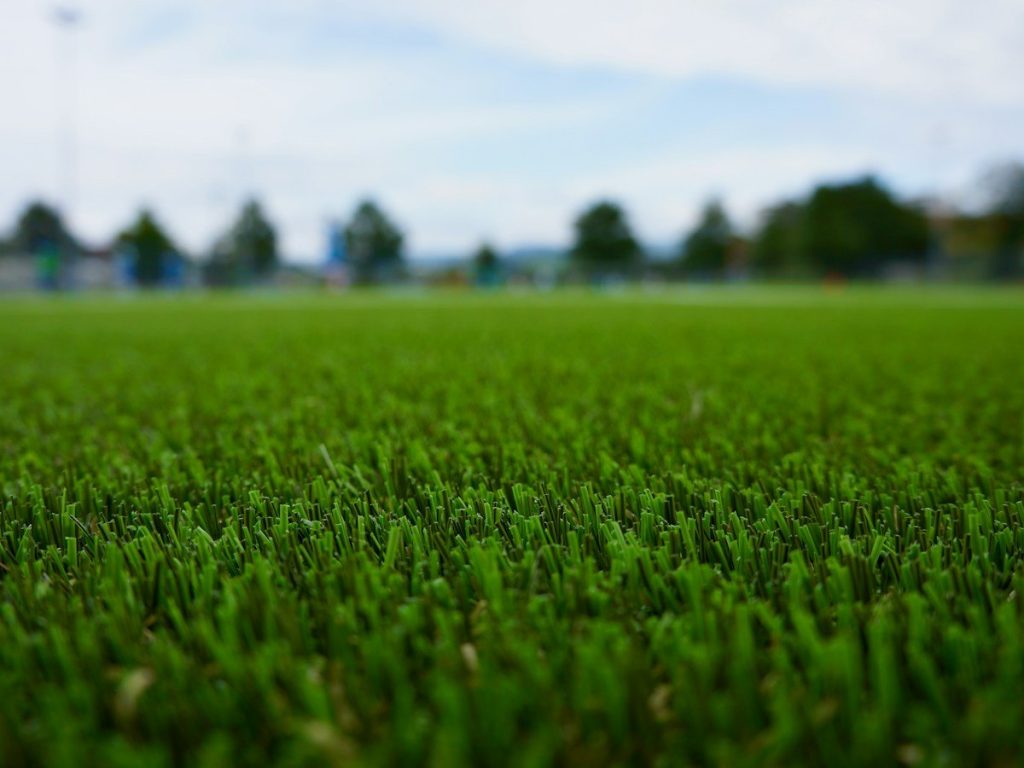
When specifying synthetic surfacing for large-scale facilities, contractors and project managers often fixate exclusively on visual appearance or initial cost per square meter. However, the true performance ceiling of any installed surface is determined by the engineering synergy between two invisible yet interdependent layers: the exposed synthetic yarn and the structural base fabric beneath it. Treating these components as isolated variables rather than a unified mechanical system inevitably leads to premature failure, uneven wear patterns, and compromised return on investment.
The visible fibers dictate tactile experience, shock absorption, and aesthetic realism, while the foundational matrix governs dimensional stability, tensile load distribution, and seam integrity. When these elements are calibrated correctly, the assembly functions as a single continuous mat capable of withstanding heavy foot traffic, dynamic impact forces, and prolonged environmental exposure. Mismatches, however, create stress concentrations that accelerate degradation at a molecular level.
Modern commercial installations span high-impact athletic complexes, municipal recreation zones, corporate hospitality terraces, and specialized pet containment areas. Each environment imposes unique mechanical demands that require precise material alignment. By decoding the chemical properties, structural behaviors, and interaction dynamics of surface fibers versus foundation layers, procurement teams can eliminate guesswork, enforce stricter quality benchmarks, and specify solutions that deliver consistent performance across a ten-to-fifteen-year operational horizon.
The Chemistry of Surface Fibers: Selecting Polyolefin Polymers
Synthetic yarn acts as the primary interface between users and the installed mat. Its performance profile depends entirely on the base polymer resin, molecular weight, filament geometry, and UV stabilization additives applied during extrusion. Three primary polymers dominate commercial manufacturing: polyethylene (PE), polypropylene (PP), and polyamide nylon (PA). Each exhibits distinct elastic modulus values, friction coefficients, and fatigue thresholds that directly influence field behavior.
Polyethylene remains the industry standard for high-traffic recreational and athletic applications due to its balanced combination of flexibility, resilience, and photodegradation resistance. Advanced PE formulations incorporate carbon black or HALS (Hindered Amine Light Stabilizers) to prevent chain scission under intense solar exposure. The resulting fibers maintain compressive recovery even after thousands of cleat impacts or equipment drags. High-density PE variants also offer superior moisture displacement, preventing wicking-related mold growth in humid climates. When paired with appropriately shaped cross-sections such as diamond, U-channels, or O-shaped hollow cores, PE delivers realistic ball roll characteristics and progressive energy return.
Polypropylene serves as a cost-effective alternative for low-impact environments and temporary installations. While initially softer than many competitors, PP exhibits higher stiffness and reduced elasticity under sustained load. Its crystalline structure makes it highly susceptible to oxidative breakdown when exposed to unshielded ultraviolet radiation. Consequently, PP excels in shaded architectural features, decorative wall coverings, or interior flooring where direct weathering is minimal. Modern commercial projects occasionally blend PP into thatch layers to reduce material costs without sacrificing top-level softness, though this requires careful factory tolerance management to prevent differential wear rates.
Polyamide nylon delivers exceptional tensile strength and abrasion resistance, historically favored for premium driving ranges and luxury putting greens. Its hydrogen-bonded molecular chains provide remarkable shape memory, allowing fibers to bounce back rapidly from deep compression. However, nylon absorbs ambient moisture, which can cause seasonal swelling and inconsistent surface hardness. Environmental fluctuations also trigger subtle color shifting over time. As manufacturing efficiencies improve, nylon usage has stabilized, reserved primarily for ultra-high-performance zones requiring maximum durability under repeated sliding motions or heavy rolling loads.
Selecting the appropriate polymer requires evaluating expected usage intensity, geographic climate variables, maintenance capabilities, and lifecycle budget parameters. Over-specifying resilient polymers for light-use landscaping inflates upfront costs unnecessarily, while under-specifying for competitive sports venues accelerates fiber fraying and seam separation. Precise material matching ensures optimal performance without compromising project economics.
Foundation Engineering: Backing Matrices and Load Distribution
While surface fibers attract immediate attention, the underlying base fabric operates as the structural skeleton. It anchors every individual strand through thermal lamination or advanced adhesive bonding, resisting lateral shear forces, vertical puncture pressures, and repetitive flexural cycles. Three primary construction methodologies define modern backing systems: knitting, weaving, and non-woven formation. Each architecture responds differently to mechanical stress and environmental expansion.
Knitted backs utilize continuous polyester filaments arranged in interconnected loop structures, typically processed on circular or flat-bed textile machinery. This configuration grants exceptional elongation capacity and lateral recovery, allowing the mat to flex dynamically without tearing. Knitted matrices excel when paired with softer PE or blended fiber systems, as their elastic nature complements compressible surface layers. Facility operators frequently select knitted foundations for multi-purpose community fields and residential rooftop decks where thermal contraction and expansion occur rapidly across seasonal temperature swings.
n
Woven backs consist of intersecting warp and weft yarns locked at rigid ninety-degree angles, traditionally utilizing cotton-core threads bonded with latex or polyurethane compounds, though modern versions predominantly employ fully synthetic polyester blends. The resulting structure offers outstanding dimensional stability, minimizing lengthwise stretching or widthwise distortion during installation and heavy operation. Woven constructions distribute point loads efficiently across the entire mat plane, making them ideal for high-friction environments involving sharp directional cuts, abrupt stops, or rolling sports equipment. Most professional-grade athletic surfaces rely on reinforced woven architectures to maintain precise line markings and consistent playing velocities.
Non-woven bases represent a third category, manufactured by entangling short staple fibers through hydroentanglement, needle punching, or thermal bonding processes. These sheets exhibit uniform thickness and predictable permeability, yet lack the structural tension recovery of textile-based alternatives. Non-woven matrices generally pair best with stiffer PP or dense filler strands intended for static architectural applications or low-impact decorative zones. Their inherent rigidity prevents excessive sagging in vertical installations or tightly tensioned perimeter setups.
Regardless of construction method, backing performance hinges on adhesive chemistry and drainage architecture. Premium installations utilize solvent-free, polyolefin-compatible laminates that fuse seamlessly with both fiber roots and foundation sheets. This eliminates volatile organic compound emissions while preventing delamination under hydraulic pressure or extreme humidity. Perforated drainage patterns, calibrated aperture sizes, and geogrid reinforcement layers further enhance water evacuation speed, reducing standing puddles and mitigating biological growth risks. Evaluating backing specifications alongside fiber selection creates a comprehensive mechanical profile tailored to specific site conditions.
Application-Aligned Component Matching Strategies
Real-world facility performance emerges from deliberate component pairing rather than isolated material preferences. Different usage environments impose distinct mechanical demands that dictate which fiber and backing combinations yield optimal results. Procurement teams must map functional requirements against polymer behaviors before finalizing purchase orders.
Sports complexes demand maximum impact absorption and directional stability. Football fields, soccer pitches, and multi-sports turf layouts require dense, rounded-tip PE fibers coupled with heavily reinforced woven backgrounds. This pairing withstands aggressive cleat penetration, prevents turf tuft pull-out during tackles, and maintains consistent ball rebound ratios. Field dimensions, marking precision, and shock pad integration all depend on this foundational rigidity.
Recreational play zones prioritize injury mitigation and chemical safety. Playground turf installations benefit from low-profile PE strands paired with softly flexible knitted mats that absorb fall energy while conforming to subgrade irregularities. Regulatory compliance frameworks mandate stringent toxicology screening, ensuring zero heavy metal leaching and compliant VOC emission thresholds across all contact layers.
Architectural and landscaping deployments emphasize aesthetic fidelity and long-term weather resistance. Commercial building facades, landscape grass medians, and hospitality terraces thrive on medium-height PE varieties matched with dimensionally stable woven or hybrid backgrounds. These configurations resist wind uplift, prevent heat-driven warping, and maintain vibrant color saturation under relentless sun exposure. Interior design applications similarly rely on lightweight PE assemblies mounted on breathable substrates to facilitate HVAC airflow and acoustic dampening.
Pet containment and municipal sanitation facilities face unique biological stressors. Animal waste introduces enzymatic acids and abrasive particulates that accelerate surface degradation if improperly sealed. Specialized pet-friendly artificial turf designs utilize antimicrobial-treated PE fibers bonded to perforated non-woven or coated woven bases, enabling rapid liquid filtration and straightforward hose-down cleaning protocols without compromising structural adhesion.
| Component Type | Key Mechanical Properties | Ideal Backing Match | Primary Commercial Applications |
|---|---|---|---|
| Polyethylene (PE) | High flexibility, UV resistance, excellent recovery | Woven or reinforced Knitted | Sports fields, active recreation zones, roofing decks |
| Polypropylene (PP) | High stiffness, cost-efficient, moderate wear | Rigid Non-woven or light Woven | Decorative interiors, shaded patios, display staging |
| Polyamide Nylon (PA) | Maximum tensile strength, low elongation | Heavy-duty Woven with latex bond | Premium putting greens, high-friction training courts |
| Bernard Cut Fiber | Dense canopy, natural shading effect | Standard Woven matrix | Residential backyard garden upgrades, corporate plazas |
| Hollow Core Strand | Lightweight, enhanced cushioning | Elastic Knitted substrate | Multipurpose recreational centers, schoolyards |
Successful pairing requires validating coefficient of friction ratings, assessing thermal expansion coefficients, and verifying adhesive cure temperatures against local climate profiles. Factory laboratory testing, including ASTM D6960 impact attenuation simulations and ISO 12331 abrasion cycle validation, provides quantifiable benchmarks before bulk deployment.
Preventing Delamination and Wear Cascade Failures
When synthetic surfaces degrade prematurely, the root cause almost always traces back to incompatible component interactions rather than random manufacturing defects. Rigid foundations paired with overly pliant fibers create anchoring voids where tufts loosen incrementally. Conversely, excessively stretchable backs combined with high-friction PE strands generate micro-tears along stitch lines as lateral drag exceeds adhesive shear tolerance. These cascading failures manifest first as uneven pitting, then as complete zone stripping that compromises safety certifications.
Quality control begins at the extrusion and loom stages. Manufacturers must calibrate yarn denier counts precisely to backing mesh spacing, ensuring each strand seats completely within designated apertures. Incomplete immersion leaves vulnerable fiber stems exposed to surface oxidation and mechanical abrasion. Thermal pressing parameters must align with polymer melting points to achieve homogeneous fusion without degrading structural integrity. Adhesive thickness tolerances should remain within specified micrometer ranges to prevent brittleness or overflow contamination on the playing surface.
Field installation practices directly influence long-term component survivability. Subgrade preparation must eliminate settlement pockets that induce localized tension spikes. Seam joining procedures require specialized tape activation and roller compaction to restore full tensile continuity. Expansion joints positioned at structural transition zones accommodate thermal movement without transferring shear stress to the primary mat body. Neglecting these variables renders even premium material specifications useless.
Audit trails and batch documentation help contractors verify supplier compliance with recognized safety frameworks. Standards such as GB 36246-2018 establish mandatory limits for formaldehyde release, phthalate concentration, and heavy metal migration. Certifications from independent testing laboratories confirm batch-to-batch consistency across raw material inputs. Procurement teams should request mill test reports alongside physical sample evaluations to validate declared specifications against actual laboratory outcomes.
Investing in verified material compatibility upfront reduces lifecycle maintenance expenditures by eliminating reactive patch repairs, recurring vacuum operations, and premature full-depth replacements. Facility owners consistently report lower total cost of ownership when initial specification phases rigorously evaluate component synergy rather than prioritizing superficial visual metrics.
Specifying synthetic surfacing requires treating the system as an integrated mechanical assembly rather than a collection of interchangeable parts. The visible fibers determine user experience, while the hidden foundation controls structural longevity. When polymer chemistries align properly with architectural load distributions, the resulting installation delivers predictable performance across decades of operation. Commercial project leaders who prioritize precise component matching consistently achieve higher satisfaction ratings, fewer liability exposures, and stronger financial returns on deployed assets.
Evolving material science continues to refine how manufacturers formulate resins, engineer backing architectures, and validate performance under accelerated aging conditions. By staying current with industry testing methodologies and applying disciplined pairing logic, facility developers can future-proof their investments against emerging environmental challenges and increased usage demands. Thoughtful specification transforms routine ground cover into a reliable, high-value infrastructure asset.