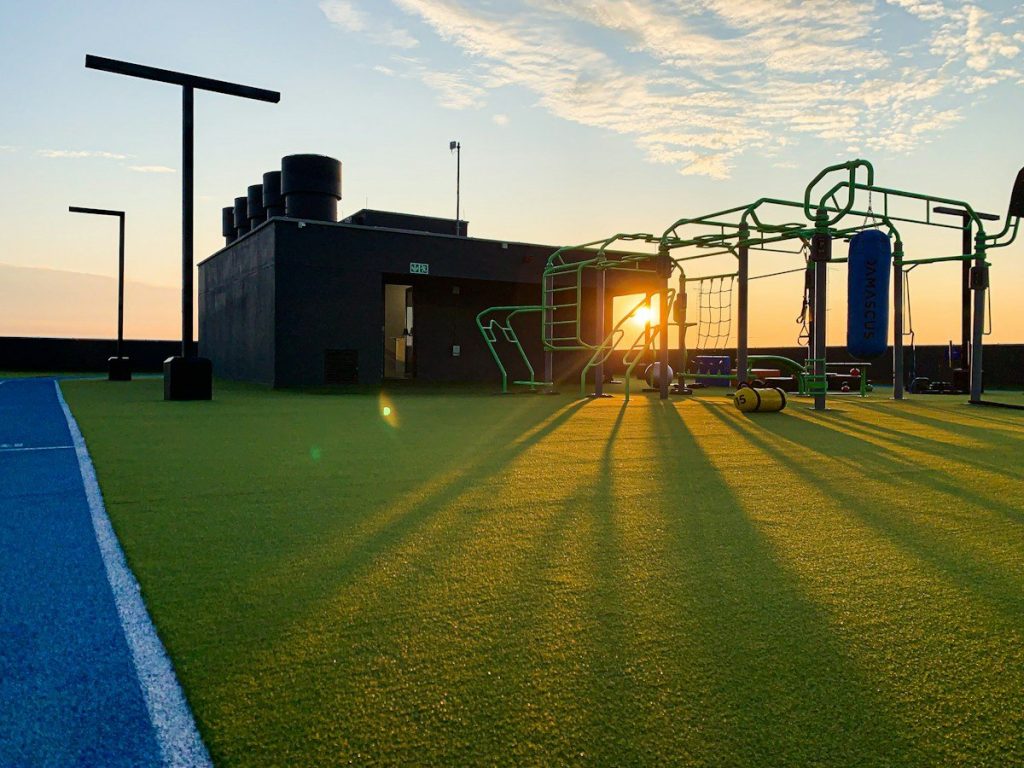
Rooftops are among the most underused assets in commercial real estate. They sit above tenants, guests, and shoppers, exposed to sun, wind, rain, and temperature swings, yet many remain bare membranes, gravel, and service equipment. Building owners often want to turn them into gardens, lounges, play areas, or hospitality decks, but traditional landscaping can be difficult to justify because of weight, irrigation, maintenance, and waterproofing risk. Artificial turf changes that equation. It gives designers and facility teams a way to create a green surface without importing deep soil, daily watering schedules, or mowing crews.
For commercial buyers, the appeal is not simply visual. A roof is a structural, drainage, and thermal system. Every material added to it must respect load limits, wind uplift, fire performance, drainage paths, and access for maintenance. Lightweight roof artificial turf is engineered for those constraints. Quality systems use synthetic fibers, permeable backings, and stable infill or backing options that keep the surface flat, safe, and predictable. The result is a green space that can be used regularly, not just viewed from a distance.
This article explains what professional specifiers, contractors, and facility managers should know before selecting artificial grass for a rooftop. It covers load reduction, thermal benefits, drainage, safety, maintenance, specification details, and lifecycle planning. Whether the project is a residential terrace, hotel roof, office amenity, school play deck, or mixed-use podium, the right turf system can unlock usable area while protecting the building envelope.
Why Rooftops Demand a Different Turf Strategy
A rooftop is not a backyard. It has no natural soil profile, limited access, constant wind exposure, and a waterproofing membrane that must remain intact. Natural turf needs a growing medium deep enough to support roots, plus irrigation, drainage, nutrients, and regular mowing. That growing medium becomes much heavier when saturated. On an existing building, the added dead load can trigger structural review, reinforcement, or a decision to abandon the project.
Artificial grass removes most of that burden. A quality roof-specific turf system is measured in kilograms per square meter, not in tons of wet soil. It does not need root zone depth, irrigation lines, or fertilizer. That makes it viable for older buildings, lightweight podium decks, and retrofit projects where the structural budget is tight. The surface can still look lush and natural, but it behaves like a finish material rather than a living landscape.
Drainage is the next critical difference. Roof drains are sized for rainfall, not for soil absorption. If water ponds under turf, it can add weight, create odors, soften seams, and stress the membrane. Good roof turf uses a permeable backing, drainage channels, and a subbase that directs water to existing outlets. The system should be designed so that heavy rain moves quickly and the surface dries fast. This also reduces slip risk and helps prevent mildew in humid climates.
Wind uplift is often overlooked. Rooftops experience higher wind speeds than ground-level gardens, especially at corners, parapets, and tall buildings. Loose turf edges can lift, flap, or tear. Professional installation uses mechanical edge restraint, adhesive, or weighted perimeter details, along with proper seam placement. For exposed sites, the specification should include wind resistance data and an installation method that matches the local wind zone.
Finally, heat and UV exposure are more intense on a roof. The surface may receive full sun from morning to evening, with reflected heat from nearby walls and equipment. Inferior turf can fade, become brittle, or lose pile resilience. A UV-stabilized fiber and durable backing are not optional upgrades; they are baseline requirements for a commercial roof. When these factors are addressed together, artificial turf becomes a practical way to turn an empty roof into a safe, usable, and attractive amenity.
Lightweight Construction Without Sacrificing Performance
Weight is usually the first question from structural engineers, and it is easy to understand why. A natural lawn on a roof requires a growing medium, drainage layer, filter fabric, and sometimes irrigation. Saturated soil can add substantial load before furniture, planters, or foot traffic are considered. Artificial turf is dramatically lighter because it is a thin surface system rather than a root-zone environment. In many projects, the turf itself weighs about one-fifth of a comparable natural lawn profile, and it stays consistent because it does not absorb water like soil.
That weight advantage does not mean performance has to be compromised. The best systems are built from the fiber up. Fiber type, pile height, stitch rate, face weight, backing construction, and infill choice all affect how the surface feels, drains, wears, and looks. A short pile with a dense backing may suit a terrace or event deck, while a taller, softer pile can work for lounging areas. For high-traffic commercial spaces, higher face weights and stronger backing help the turf keep its shape under constant use.
Buyers should compare more than price per square meter. Ask how the product handles UV exposure, how quickly it drains, whether it can be installed over the existing membrane with a protection layer, and what maintenance it needs. A lightweight product that fails in two years is more expensive than a durable system that lasts a decade. The table below outlines the practical differences that matter most when planning a commercial roof.
| Performance Factor | Natural Turf on a Roof | Quality Roof Artificial Turf | Buyer Impact |
|---|---|---|---|
| Weight and structural load | Requires growing medium; weight rises when saturated | Thin synthetic surface, often about one-fifth the weight of natural turf profile | Easier retrofits and less reinforcement |
| Growing medium | Deep soil or engineered substrate needed | No root zone required | Saves depth, load, and installation time |
| Water and irrigation | Regular watering; irrigation lines and drains | No irrigation for appearance | Lower water use and simpler plumbing |
| Maintenance | Mowing, feeding, weeding, pest control | Debris removal, brushing, occasional rinse | Lower labor and access requirements |
| UV and color stability | Can scorch, dry out, and discolor in heat | UV-stabilized fibers resist fading and embrittlement | Year-round visual consistency |
| Drainage | Depends on soil and drainage layers | Permeable backing and drainage channels | Less ponding and faster drying |
| Use and comfort | Can become muddy or patchy | Soft, consistent surface for bare feet and furniture | More usable days per year |
For commercial buyers, the table points to a simple conclusion: the right turf is not just lighter, it is more predictable. Predictability matters on a roof because access is difficult and repairs are costly. A system that drains, wears, and cleans consistently protects both the building and the guest experience. That is why many contractors now treat commercial artificial turf as a finish material with its own specification section, rather than as a landscape afterthought.
Thermal, Environmental, and Operational Payback
Rooftop greenery is often sold on aesthetics, but the financial case is stronger when thermal performance is included. In summer, a turf-covered roof can reduce the amount of solar heat reaching the waterproofing membrane and the rooms below. Depending on climate, insulation, and system design, surface temperature reductions of 10-15°C are achievable compared with exposed dark membranes. That lower heat load can reduce air-conditioning demand on top floors, improve occupant comfort, and ease strain on HVAC equipment during peak hours. A turf layer can also add a small amount of winter insulation, though it is not a replacement for code-required insulation.
Environmental benefits extend beyond energy. Natural lawns on roofs require water, fertilizer, fuel for mowing, and replacement plantings when conditions become too harsh. Artificial turf removes those inputs. It also avoids pesticide and nutrient runoff, which can be a concern when roof drains discharge to storm systems. Permeable turf systems can help manage rainwater by slowing and filtering flow before it reaches drains, although the primary drainage design still belongs to the roof engineer. The surface itself is durable and, depending on the product, can be recycled at end of life through selected programs.
Operational savings are easier to measure. There is no mowing schedule, no irrigation repair, no fertilizer storage, and no need to bring heavy equipment onto a roof. Maintenance typically involves removing leaves and debris, brushing the pile to keep it upright, and rinsing spots with water. For hotels, offices, and multifamily properties, that means fewer vendor visits, less disruption for occupants, and a green space that remains presentable through busy seasons. A well-specified landscape grass product can deliver this low-maintenance performance while matching the design intent of the building.
One caveat is surface temperature. Synthetic turf can become warm in direct sun, especially with dark fibers or heavy infill. Designers can manage this with lighter colors, appropriate infill, airflow details, and shaded zones. The goal is not to claim that artificial turf is always cool to the touch, but to design a system that reduces heat transfer to the building and remains comfortable during the hours when the roof is used. This balanced approach gives owners a realistic view of thermal and operational payback.
Design, Safety, and Applications for Commercial Roofs
Artificial turf on roofs is no longer limited to simple green rectangles. Designers use it to define zones for dining, yoga, play, pet relief, events, and quiet seating. It can be cut into curves, combined with pavers and decking, or installed wall-to-wall for a seamless lawn effect. A balcony and terrace turf system can make a compact urban balcony feel larger, while a larger roof can support multiple activities without the mud, dust, or patchiness of real grass.
For hospitality and office projects, the surface helps extend usable hours and seasons. Guests can walk barefoot, children can sit on the ground, and furniture can be rearranged without damaging a living lawn. For residential buildings, a green roof deck can become a differentiator that supports leasing and resident retention. For retail and mixed-use developments, it can turn dead roof area into a photogenic amenity that supports events and social media exposure.
Safety must be matched to use. On a general terrace, a soft, stable turf surface reduces scrapes and provides a comfortable walking surface. On a playground turf area, the specification must include appropriate fall attenuation, usually with a shockpad or engineered base, and must meet the relevant safety standard for the play equipment height. Drainage is part of safety as well: a surface that dries quickly is less likely to become slippery. Edges, stairs, and parapets also need clear separation and code-compliant guardrails, because turf does not replace fall protection.
Fire performance is another professional consideration. Commercial roof assemblies may require specific fire classifications, and the turf system should be reviewed as part of the overall roof build-up. Installers should confirm compatibility with the membrane, insulation, and any required separation layer. In some projects, a fire-rated backing or specified infill is needed. These details are best resolved during design, not after the turf is delivered.
Visual design has become more sophisticated as well. Buyers can choose pile heights, blade shapes, color blends, and directional installation to mimic natural grass. Combining turf with planters, screens, and an artificial plant wall can add privacy and vertical interest without increasing structural load. The goal is a coherent outdoor room that feels intentional, not a carpet dropped onto a roof. When design, safety, and drainage are coordinated, the roof becomes a genuine extension of the building.
Installation, Specification, and Lifecycle Planning
Successful roof turf projects start with the substrate. The existing waterproofing membrane must be protected, and the installer needs a clean, stable base. Depending on the assembly, this may include a drainage mat, geotextile, rigid board, or a protection layer. If the roof has ponding issues, they must be corrected before turf is installed. Turf can hide small imperfections, but it cannot fix poor drainage or a failing membrane.
Edge restraint is essential. The perimeter should be fixed with a method suitable for the roof structure and wind zone. Seams should be glued or sewn according to the manufacturer’s instructions, with attention to expansion and contraction. Infill, if used, should be spread evenly and brushed into the pile. The installation team should also plan for future access to drains, vents, and equipment, using removable panels or clear service zones so maintenance crews do not cut into the turf.
When writing the specification, ask for measurable data rather than general claims. Useful submittals include fiber type, pile height, face weight, backing type, permeability rate, UV resistance, fire classification, and warranty terms. For commercial projects, it also helps to request sample references from similar roof installations, especially ones with high wind or intense sun. A product that performs well in a shaded backyard may not be the right choice for an exposed podium deck.
Lifecycle planning should cover cleaning, inspection, and repair. Most roof turf systems need periodic removal of leaves and debris, brushing to lift flattened fibers, and spot cleaning for spills. Heavy traffic areas may need occasional top-up of infill or re-brushing. With proper care, a quality system can provide many years of service, often in the range of 8-15 years depending on climate, use, and product quality. That lifespan should be compared against the cost of irrigation, soil, plants, mowing, and replacements for a natural roof garden.
Finally, think about the total roof experience. Access routes, lighting, seating, windbreaks, and storage all affect how often the space is used. Turf is the foundation, but the amenity value comes from how the whole deck works together. A clear specification, an experienced installer, and a realistic maintenance plan will protect the investment and keep the space looking good long after the first season.
Rooftops are valuable because they are rare. In dense cities, every unused square meter is an opportunity for amenity space, tenant satisfaction, and building performance. Artificial turf makes that opportunity achievable for projects that cannot support the weight, water, and maintenance of a traditional roof garden. It is lightweight, durable, and adaptable, and it can transform a bare membrane into a green room that people actually use.
For commercial buyers, the decision should be based on performance rather than appearance alone. Review structural load, drainage, wind uplift, UV stability, fire requirements, safety, and maintenance access. Compare products on face weight, backing quality, and warranty, not just color. Then choose an installation method that respects the waterproofing system and the realities of rooftop access. When these details are handled correctly, artificial turf becomes a long-term asset rather than a decorative cover.
SUNDOTURF works with contractors, landscape architects, and facility teams to match roof artificial turf systems to the demands of each project. From compact terraces to large commercial decks, the right surface can reduce load, lower maintenance, and create a green escape above the street. The roof does not have to be empty. With careful planning, it can become one of the most valuable spaces in the building.