
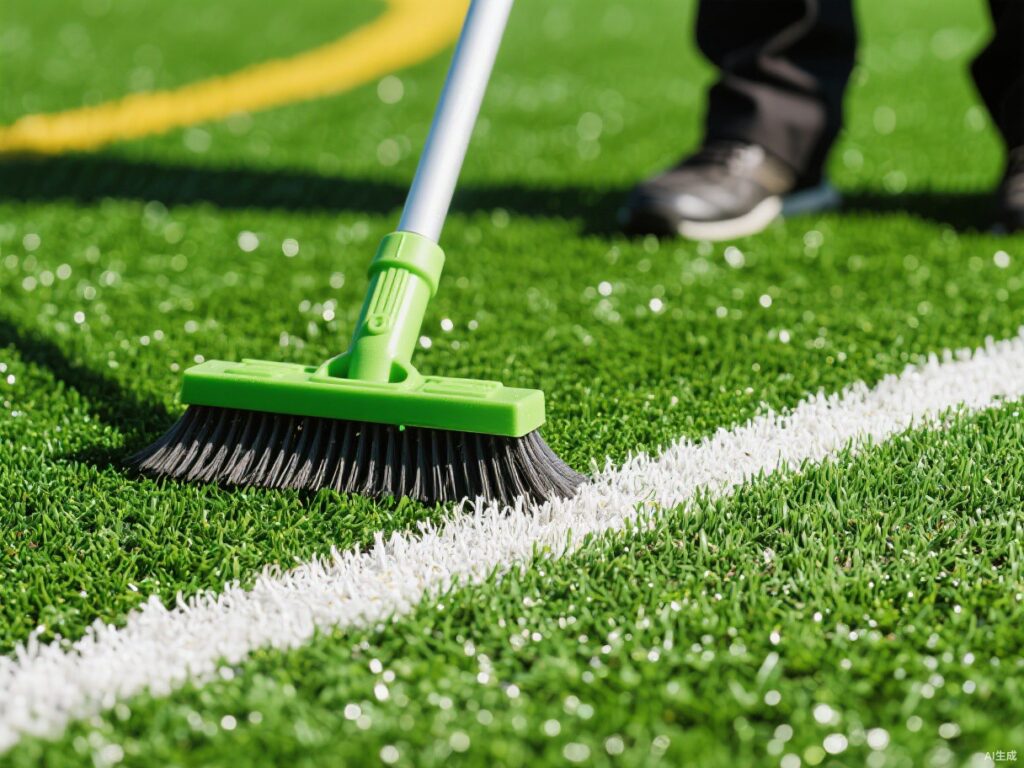
One of the biggest advantages of artificial grass is how little maintenance it needs — but “low maintenance” is not “no maintenance”. A simple routine keeps it looking fresh and extends its lifespan considerably.
Regular brushing
Foot traffic gradually flattens the yarn. Brush the pile against the grain every few weeks (more often in high-traffic areas) with a stiff-bristled or power brush to keep blades upright and the surface even. This also redistributes infill.
Removing debris
Clear leaves, twigs and litter regularly with a leaf blower, plastic rake or by hand. Organic matter left to decompose can encourage weed growth and block drainage.
Cleaning spills and stains
Most spills rinse away with water. For stubborn marks, use mild soapy water and a soft brush. Avoid harsh solvents or bleach, which can damage the yarn and backing.
Pet areas
Remove solid waste promptly and rinse the area. For odor control, use a diluted vinegar solution or a specialist turf sanitizer, and top up infill as needed. Good drainage in the base makes pet-area upkeep much easier.
Weeds and moss
Occasional weeds may appear around edges or through drainage holes. Pull them by hand or use a water-based weed killer. In shaded, damp spots, a moss treatment and improved airflow will help.
What to avoid
- Do not place barbecues, fire pits or hot objects on the turf — heat melts the fibers.
- Avoid parking heavy vehicles on it for long periods.
- Keep sharp objects and chewing gum away from the surface.
- Be cautious with mirrors or reflective glass nearby, which can focus sunlight and scorch patches.
Seasonal care
After winter or heavy use, give the lawn a thorough brush and check infill levels, seams and edges. A quick inspection a few times a year prevents small issues from becoming big repairs.
The bottom line
Fifteen minutes of care every few weeks — brushing, debris removal and the occasional rinse — is all it takes to keep your artificial lawn looking as good as the day it was installed.